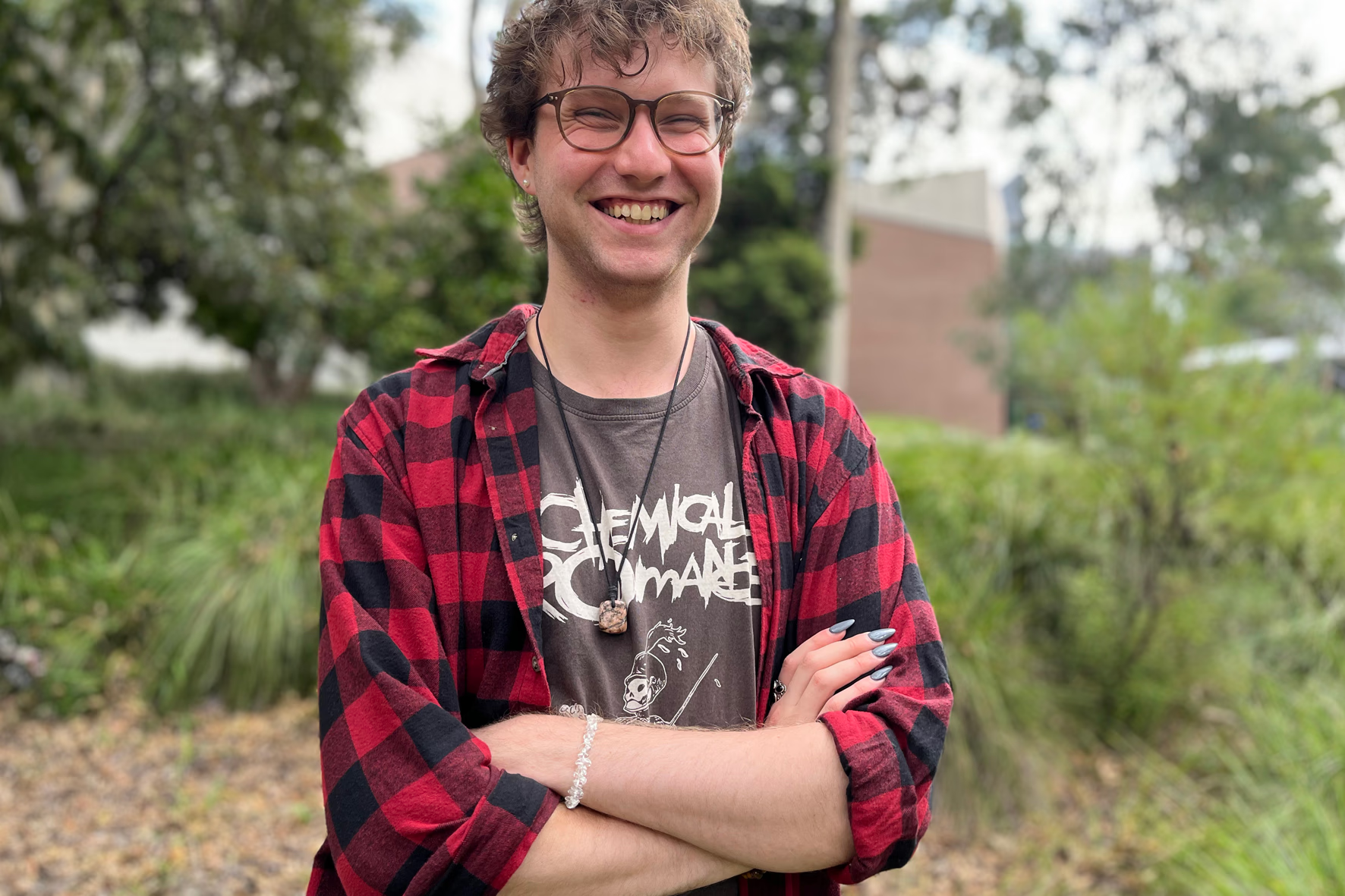
Shaping the Future of Indigenous Mental Health
STUDENT SPOTLIGHT: John Sopar
At Monash University, John Sopar's journey reflects how community, lived experience and education come together to shape a future focused on improving mental health outcomes.
Proud Anangu person from the Western Desert regions near Uluru with strong ties to Wurundjeri Country, John's pathway has not been linear. It has been grounded in a consistent commitment to understanding people, strengthening community and contributing to better mental health support for Indigenous Australians.
The Turning Point
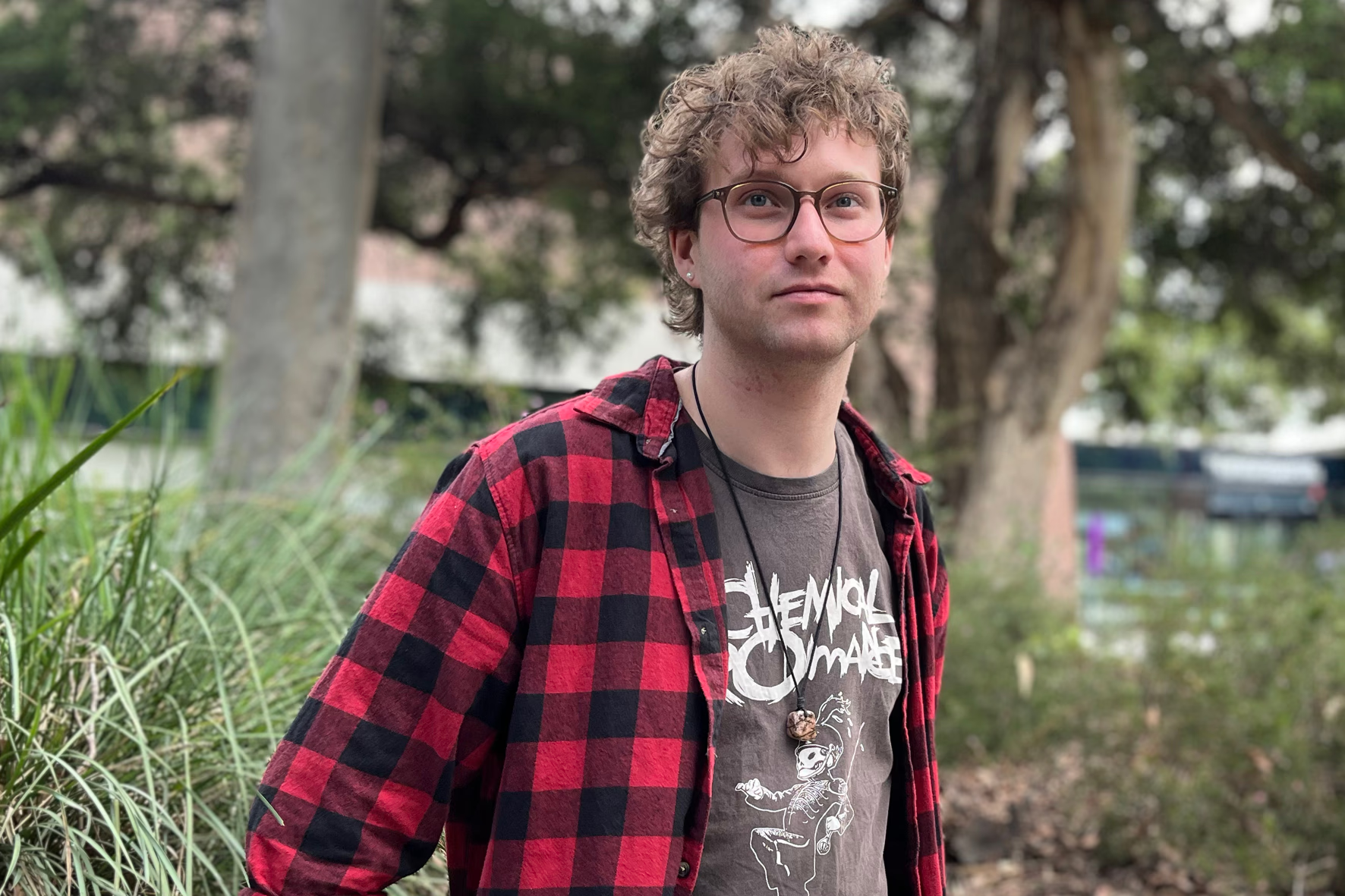
Now in their sixth year of undergraduate study, John is completing a double degree in Science and Arts, majoring in Psychology and Philosophy. However, their starting point looked very different.
"I started in Biomedicine and science because I thought that was the pathway into medicine and psychiatry," John explains. "But I realised pretty quickly it wasn't for me. I realised what I actually liked wasn't just anatomy or chemistry. It was people as whole humans."
That realisation became a turning point rather than a setback. John transferred into Arts, shifting their focus toward fields that aligned with their core interest: the human experience.
Real-World Impact with CareerTrackers
Alongside their studies, John has completed multiple internships through the CareerTrackers program, gaining exposure to industries ranging from data research to corporate healthcare. Their first placement at the Social Research Centre provided a crucial moment of self-discovery.
"I realised how much statistics was involved," John says. "And I had to rethink things a bit. I started thinking more about allied health and broader healthcare systems instead."
This led them to Bupa, where they have now completed multiple internships across internal communications and health centre operations. These roles bridged the gap between university theory and the "behind-the-scenes" reality of healthcare.
"There's so much that happens outside of doctors and psychologists that makes healthcare work. Someone has to manage systems, communications and all the operational pieces that hold it together.
"One of the biggest things I learned was how different professional writing is compared to academic writing," John notes. "I wrote something and my manager said it was good, but too dense, too academic. I had to learn how to communicate in a completely different way."
Finding a Voice and a Community
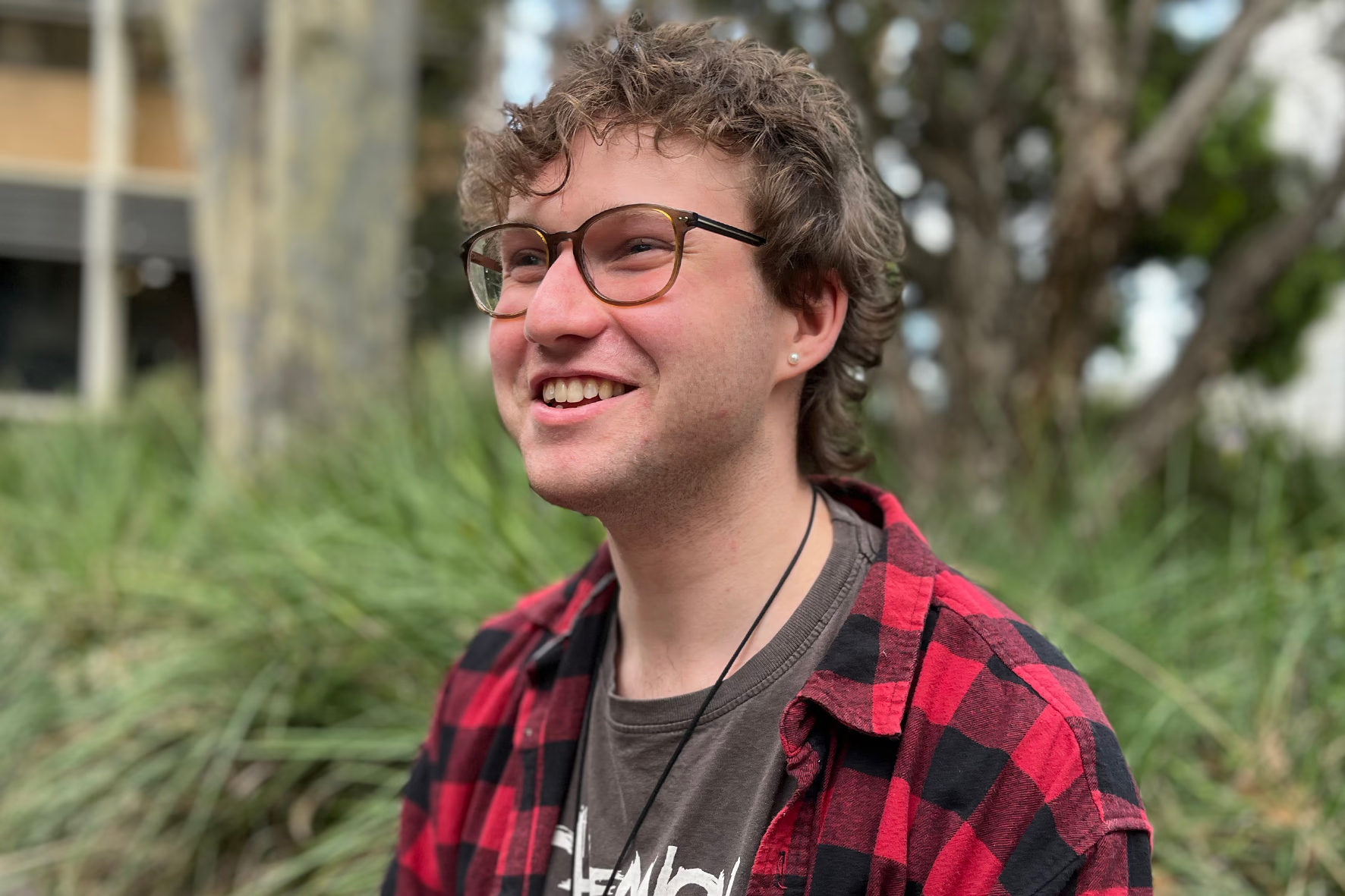
For John, the CareerTrackers program has provided a vital sense of belonging and professional confidence.
"I've made friends through the program who I still see at different workplaces and events. That sense of community is what keeps bringing me back."
That community support helped John navigate the transition from a reserved student to a proactive professional.
"I'd sit and listen a lot because I assumed other people knew more than me," they say. "But my manager actually pulled me aside and said, 'If we ask for your opinion, we want your opinion.' That changed a lot for me."
Today, John uses that confidence to ensure diverse perspectives are included in every project they touch. "I tend to think about who's missing from the conversation. It's rarely intentional when people overlook things. More often, they just haven't thought of it."
A Commitment to Community
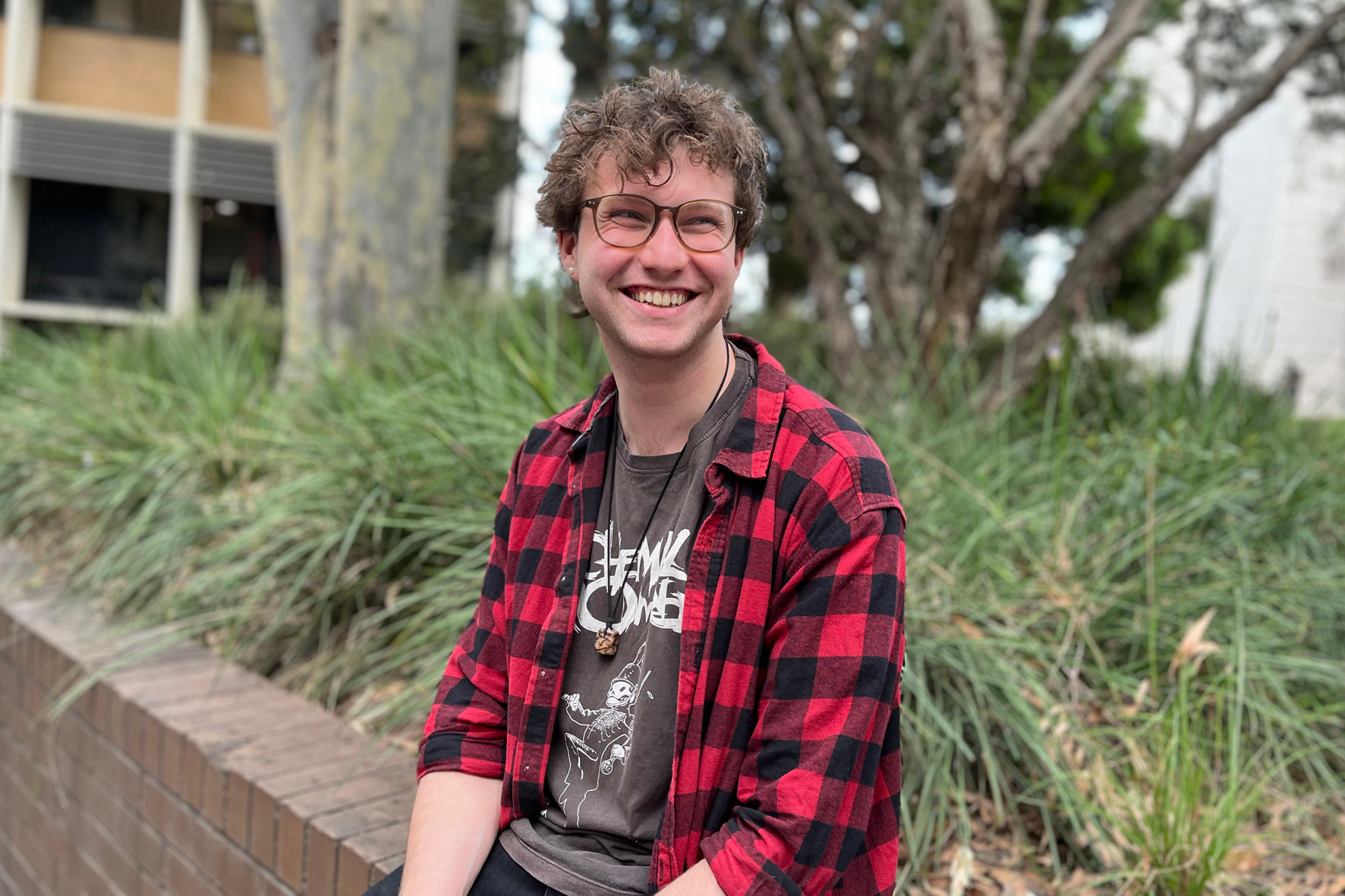
Outside of work and study, John remains deeply connected to their identity. They speak about Indigenous health and psychology not as abstract interests, but as personal commitments shaped by family history and future responsibility.
Their long-term goals are to become a registered psychologist and to contribute to both clinical practice and research that better supports Indigenous Australians. They are particularly interested in addressing gaps in culturally adapted psychological assessment tools and increasing representation in the field.
The Ripple Effect
Looking ahead, John plans to complete honours and postgraduate study in clinical psychology. Their motivation remains steady: increasing representation in a field where Indigenous voices are vital.
"There are so few Indigenous psychologists in Australia. We need more people in the system so we can improve outcomes for our communities," John says.
"If I can make things better for even one person, that matters. Often, it's not just one person, it's the ripple effect after that."